

What is Generation Beta? (2025–2039) — a parent’s guide
November 1, 2026 | by genbeta_admin

If your child was born in 2025 or later, demographers already have a name for them: Generation Beta. Like “Millennial” or “Gen Z”, it is a shorthand, not a destiny. But generational labels are useful for one reason: they describe the world a child will grow up in. And the world Gen Beta is entering is very different from the one their parents knew.
This guide explains where the term comes from, the trends that will shape these children, and, most importantly, the practical choices parents can make now while their Gen Beta child is still tiny.
Who counts as Generation Beta?
The term was popularised by the Australian social researcher Mark McCrindle, whose team also coined “Generation Alpha”. In their definition, Generation Beta covers births from 2025 to 2039, following Gen Alpha (2010–2024). By 2035, Gen Beta is projected to be roughly 16% of the global population, and a significant share of them are expected to live into the 22nd century.
- Gen Alpha: born 2010–2024, the first generation raised entirely with smartphones and tablets.
- Gen Beta: born 2025–2039, the first generation raised with conversational AI as an ordinary household tool.
- Their parents: mostly younger Millennials and older Gen Z, who are themselves digital natives.
What makes Gen Beta different?
AI is ambient, not novel
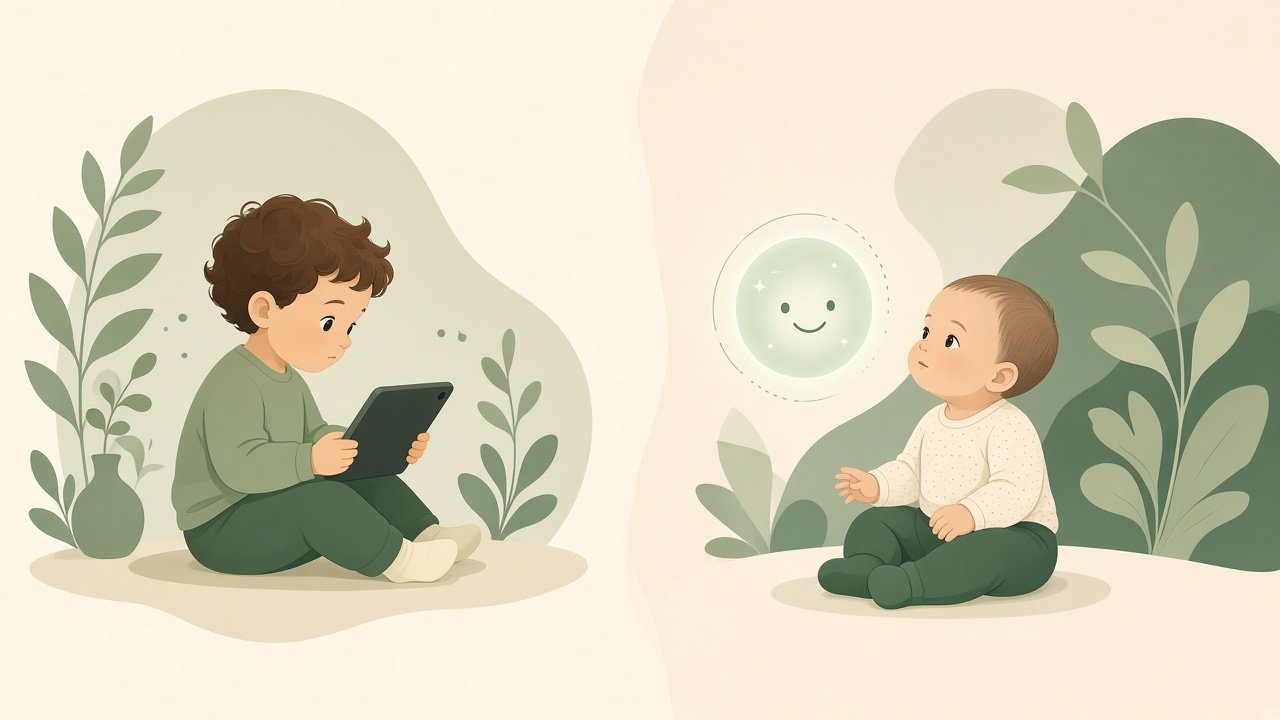
For Gen Alpha, the tablet was the big shift. For Gen Beta, the shift is that technology talks back. Voice assistants, AI tutors, smart toys and recommendation systems will be present from the cradle onward. To these children, asking a machine a question will feel as normal as turning on a tap.
A digital footprint that starts before birth
Scan photos, gender-reveal videos and baby announcements mean many Gen Beta children have an online presence before they have a name. That footprint grows every year, usually shaped by adults rather than the child.
Raised by digital-native parents
Millennial and Gen Z parents tend to research heavily, value authenticity, and are often sceptical of hype. They are also more likely to share parenting online, and to feel the pressure that comes with it.
A world of big shared challenges
Climate change, ageing populations, and rapid change in work and education will be background facts of Gen Beta life. Researchers expect themes like sustainability, community and adaptability to define the generation.
What Gen Beta probably will not be
It is easy to overhype a generation. Babies born in 2026 need the same things babies have always needed: responsive care, sleep, nutrition, play, language and love. No app replaces that. The label tells you about the environment, not about your child’s personality.
What this means for parents right now
The early years are where small, deliberate habits matter most. A few areas are worth thinking about before they are decided for you:
- Privacy: decide early what you share about your child online, and where. Consider private albums instead of public posts.
- Screens: follow evidence-based guidance for babies and toddlers (see our screen-time basics).
- Smart devices: judge baby tech by safety and need, not novelty (see AI in the nursery).
- Talk and play: face-to-face conversation is still the single best “technology” for early language.
- Your own habits: children copy what they see. How you use your phone is the first lesson they get about technology.
Key takeaways
- Gen Beta = children born roughly 2025–2039.
- They will grow up with AI as an everyday tool, not a novelty.
- Most are raised by Millennial and Gen Z parents.
- The basics of good early childhood have not changed.
- Privacy, screens and device choices are worth deciding deliberately and early.
Frequently asked questions
Is Gen Beta an official scientific category?
No. Generational ranges are conventions used by researchers and marketers. Different sources may use slightly different years, but 2025–2039 is the most widely cited range.
My baby was born in late 2024. Are they Gen Alpha?
By the standard definition, yes, but the cut-off is arbitrary. A child born in December 2024 will grow up in almost exactly the same world as one born in January 2025.
Should I keep my child away from AI completely?
Most families will not be able to, and do not need to. The goal is age-appropriate, supervised use with clear limits, and plenty of offline time, especially in the first years.
How Gen Beta compares with earlier generations
Generational labels are a shorthand, not a horoscope. Still, they help explain the world a child is born into. Here is the rough picture most researchers use:
- Millennials (c. 1981–1996): grew up as the internet arrived; many are now parents of Gen Alpha and early Gen Beta children.
- Gen Z (c. 1997–2012): the first smartphone-native generation, now entering parenthood and raising a large share of Gen Beta.
- Gen Alpha (c. 2010–2024): grew up with tablets, streaming and voice assistants.
- Gen Beta (c. 2025–2039): will grow up with AI assistants, smart homes and personalised learning as ordinary background technology.
The practical difference for parents is not the gadgets themselves but the defaults. A Gen Beta child may never remember a world where you could not ask a device a question out loud. That makes the habits you model at home, around attention, privacy and boredom, more important rather than less.
Five forces shaping Gen Beta childhoods
- Everyday AI. Voice assistants, recommendation feeds and AI tutors will be normal. Children will need help understanding that a confident answer is not always a correct one.
- Smaller, older families. In India and worldwide, parents are having fewer children and often having them later, which means more attention, and more spending, per child.
- Urban living and nuclear families. Many Indian parents now raise babies away from grandparents, relying on video calls, WhatsApp groups and online communities for advice.
- Climate and health awareness. Air quality, heat and water safety are real parenting topics in Indian cities, not abstract issues.
- Digital identity from birth. Photos, Aadhaar-linked records and app accounts can create a data trail before a child can speak.
A short checklist for new Gen Beta parents
- Decide early how much of your baby’s life you will share online, and tell family members your rule.
- Keep the first year mostly screen-free, apart from video calls. See our screen-time guide.
- Choose baby tech for safety and privacy first, features second. Our baby monitor guide explains what to look for.
- Build an offline “village”: a paediatrician you trust, one or two experienced friends, and family support where possible.
- Work through our first-year checklist a month or two before your due date.
Common myths about Generation Beta
“Gen Beta babies need tech early to keep up.”
There is no evidence that infants benefit from apps or educational videos. Babies learn language and thinking skills from responsive, face-to-face interaction. Tech skills are easy to learn later; early attention and language are not.
“AI will raise them anyway.”
AI may help with information and logistics, but it does not replace warm, consistent caregivers. Read AI in the nursery: helpful tools vs hype for a balanced take.
“The label means every child will be the same.”
Not at all. Family culture, language, money and location matter far more than birth year. A child in Beawar and a child in Bengaluru will have very different Gen Beta childhoods.
Frequently asked questions
Is my baby born in January 2025 Gen Beta?
Yes. Most researchers, including McCrindle who popularised the term, start Generation Beta on 1 January 2025.
Who coined the term Generation Beta?
Australian social researcher Mark McCrindle and his team, following the Greek alphabet after Generation Alpha.
What comes after Gen Beta?
Following the same pattern, children born from around 2040 are expected to be called Generation Gamma.
Where to go next
New here? Read the first-year checklist, then the baby registry essentials for India and the month-by-month first-year shopping list. You can browse everything in Gen Beta 101 or the full article list.
Have a question we should cover? The Gen Beta Guide is written for real families. Send us a note and we may answer it in a future article.
This article is general information, not medical advice. Always talk to your paediatrician or health visitor about your own child.
RELATED POSTS
View all

Gen Alpha vs Gen Beta: 7 differences every parent should know
November 1, 2026 | by genbeta_admin